In Praise of the Humble Pop-Up Camper

After six years of faithful service, we sold our old pop up camper last month.  Pop-ups occupy the extreme modest end of the RV spectrum. Think of it as an awesome big mobile tent rather than an apartment on wheels and you will have an accurate picture. But for a family on a budget, a pop-up has a lot to offer:

  • Its affordable.  I bought ours when it was seven years old for $2,500 dollars.  We took it to 14 states, 11 national parks, and a whole bunch of state parks, not counting short trips all over Texas.  We probably put 15,000 miles on it.  I sold it in July for $2,200.  Even with costs of maintenance and improvements, the amortized per-camping-night cost is under $10 per night.
A car full of kids, a box of food , a cooler of beer, a canoe on the roof, and a pop-up = four days of fun camping at a local state park.
  • Its relatively big when up.  After modification ours could easily hold all of our stuff with 7 foot-long beds for six people and had enough space to hang out in a rainstorm. 
Interior after I removed the “kitchen.” Lots of space for storing luggage in transit and plenty of room for kids to spread out.
  • Its comfortable.  Pop-ups have real beds that are way more pleasant than an air pad or cot.  Ours had an air conditioner, which made camping in the Texas summer possible rather than an exercise in torture.  When the temperature is nice the ability to open all the windows is great.
One key to pop-up comfort is a large awning. This is a semi-weather protected area for cooking and provides shade on hot days.
  • Its easy to tow.  Most pop-ups are under 2,000 lbs even loaded up. Ease of towing is something that is overlooked until you have to actually do it on a twisty road in the mountains or rush hour in a big city.  Towing a pop-up you have good vision, can still go 75 mph, and the hit to gas mileage is only a few mpg.
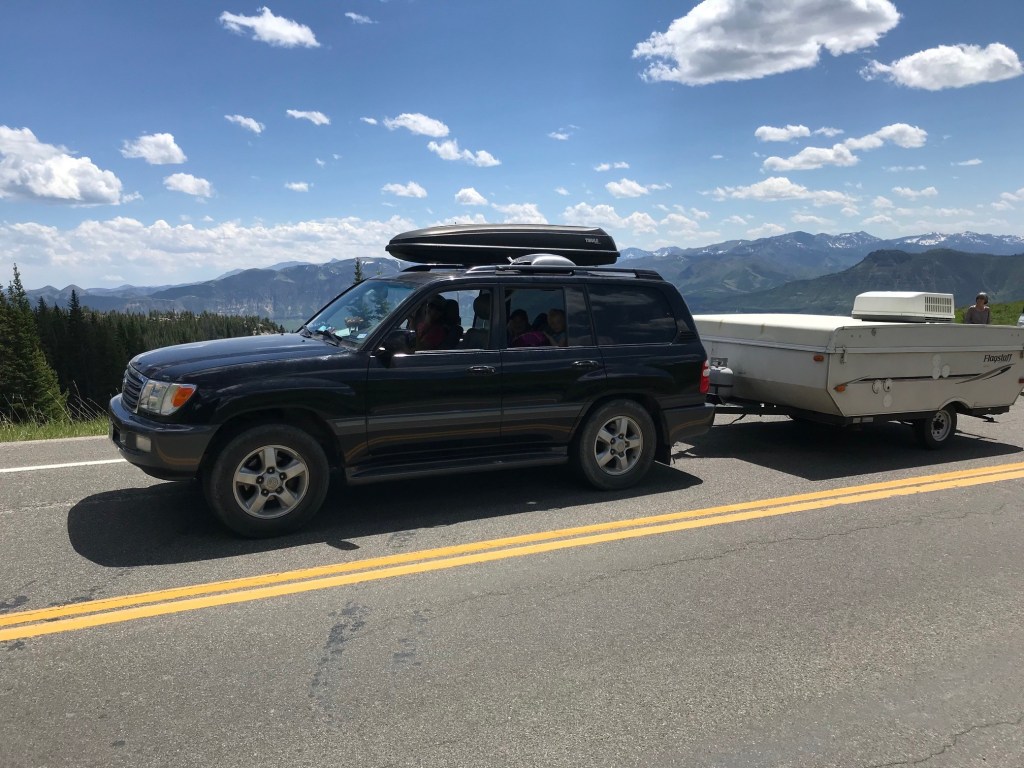
The pop-up in tow going up the Beartooth Highway in Montana. Mountain roads are fine with a pop-up.
  • It fits in garage.  Because fits in a normal garage, it is easily secured and accessible.  Most RVs cost more just in terms of storage over the years than pop-ups cost in total.

There are some disadvantages:

  • It takes some time to set up and break down.  Over the years I got good at it, but it’s a 20-minute process up and down, even with practice.  While not a deal killer, we found that compared to other options a pop up is not great for moving campsites every day.  It’s a base camp.
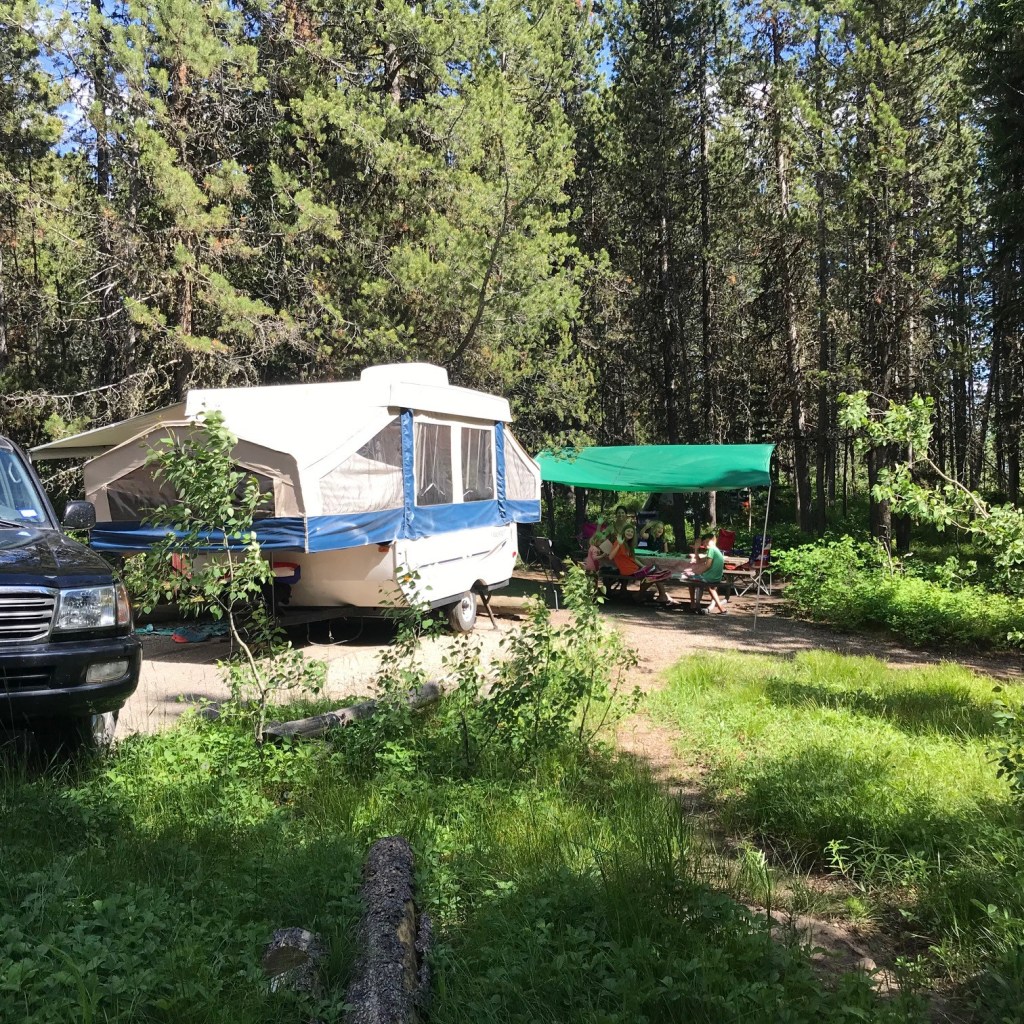
Pop-ups are great when you can set everything up and stay 3-5 days at a single location.
  • Pop-ups are not always designed with convenience of real camping families in mind.  For instance, ours came with an incredibly impractical drop down stove and sink.  The stove and sink took up almost all of the storage space when down, but was not big enough to allow for convenient cooking when up.  Since we prefer to cook outside when camping anyway, I rebuilt the interior and took all that stuff out.  This was a vast improvement. Most pop-ups on the market would be better if they were simpler and did not try to compete with fifth-wheels.
  • Pop-up build quality is shit.  American RVs are generally  cardboard/particle board held together with staples.  The hardware is flimsy.  Even if you baby it, things will break and wear out.
  • The build quality limits where you can go.  I would never take a pop-up down a rough gravel road, not to mention some of the nice four-wheel drive campsites.
This awesome backcountry site in Big Bend NP is down a 5 mile very rough road. Had to take a tent because the pop up would have been killed.
  • Because it is not hard sided some campgrounds in grizzly country are off limits. If you don’t plan on camping in Wyoming, Montana or Alaska, not a problem.

So why did we decide to sell our pop-up?  Mainly we wanted something that is easier to set up and that we can take to remote campsites on rough roads.  There don’t appear to be a lot of options that fit six people and meet these criteria for a reasonable price, but I have some ideas.  For families looking to get outside on a budget, particularly for those with little kids or where one spouse is hesitant to sleep in a tent (it happens!), the pop-up is a real option to consider.

Pedernales Falls

The Pedernales (pronounced “Per-din-al-is” to you foreigners) river drains much of the hill country west of Austin.  Arising in Kimble County, the Pedernales flows through Fredericksburg, the LBJ Ranch, Johnson City, and ultimately meets the Colorado River in Lake Travis.  About an hour west of Austin, the river drops over Pedernales Falls.  Over 4,000 acres around the falls is part of a state park.

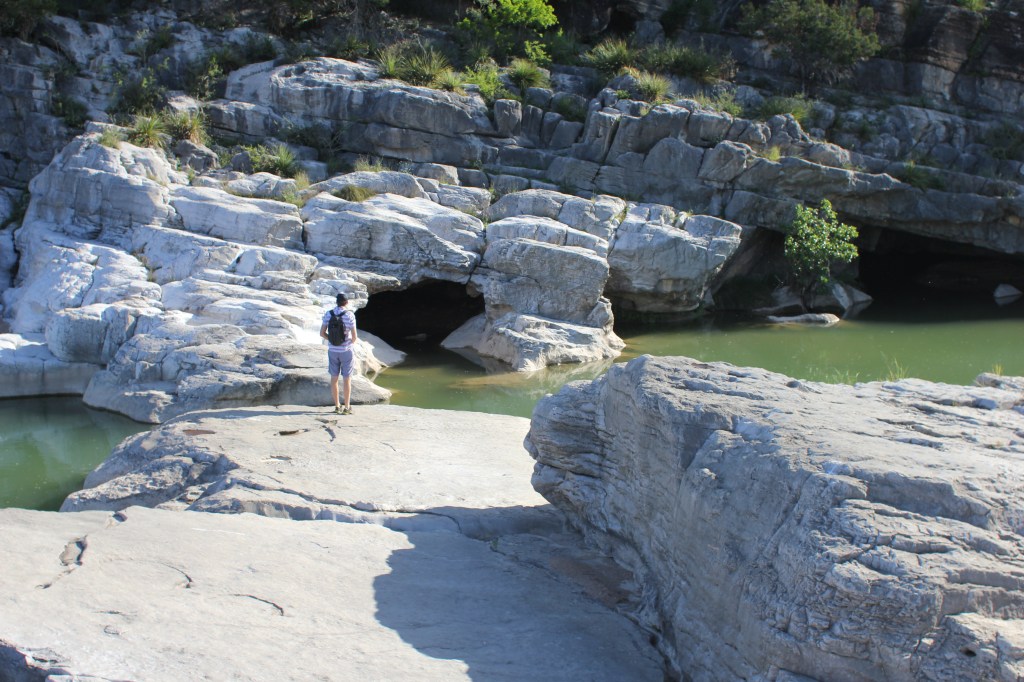
Part of the falls during low flow.

Pedernales Falls State Park hits a sweet spot in terms of what it offers.  You can find more spectacular hiking (E Rock), better swimming holes (Balmorhea), more dramatic scenery (Palo Duro), and clearer rivers (Devils) – but not a single place with all of that within an hour of a big city.  It checks a lot of boxes.

The River

TPWD has basically split the river into a portion where you can swim and tube, and a portion where you can’t.  The part where you can’t swim is the falls and immediate miles downstream; for safety from flash floods and, I suspect the real reason, people being idiots.  The hiking around the falls is great.  Lots of interesting rock formations as the river flows over tilted limestone, and lots of opportunities for exploring. 

Too many “hold my beer” moments in the 70s = we can’t swim here now.

Downstream there is a dedicated swimming area.  The river here is pretty shallow and runs clear over a rocky bottom.  Big cypress trees line the banks and it’s a good place to hang a hammock.  The river is normally clear and cool, with good water quality. There is usually also a small rope swing.

Swimming area.

The Trails

There are many miles of trails in the park for hikers, horses, and mountain biking.  I have hiked some, and even volunteered at a night trail run at the park.  The trails are fine but not the attraction.  The attraction is the river.

Camping

The park has 69 car-camping sites.  Some have shade but many are exposed.  Good fall-winter-spring camping but in the summer, you may want a rig with A/C.

The backcountry sites are great for taking kids on a backpacking trip.  They are situated on a shaded bluff above the river, about a two-mile hike from the trailhead.  There is a pit toilet nearby.  From the sites you can follow the draws down to the river.  I have camped here with my kids and with scout groups and we had lots of fun.

Rating

Pedernales Falls State Park gets 4 stars.  You can swim, climb rocks, and relax a short drive from Austin.  Even if you are just driving through its worth a few hours to hike the falls and swim the river.  If you live in central Texas, spend some more time there – it’s fun.

Enchanted Rock

With a relative dearth of public land in Texas, one becomes familiar with the parks within a couple hours of home.  One of my favorites is Enchanted Rock State Natural Area.

Enchanted Rock is located between Llano and Fredericksburg in the Texas Hill Country, about 90 minutes from Austin and San Antonio.  Unlike most of Texas, which lies on sedimentary rock, Enchanted Rock is on the Llano Uplift, a large area of granite.  If you have ever seen the pink granite of the Texas State Capitol, that is what the Llano Uplift looks like.  Enchanted Rock is part of a giant piece of granite that encompasses over 60 square miles.  It makes a fantastic area to explore.

If hide and seek ever becomes a professional sport I imagine they will have the championship at this park.

Unfortunately, the awesomeness of Enchanted Rock is not a secret and the Texas Parks and Wildlife Department has, out of necessity, adopted a quota system to ensure the park is not overrun.  Below are some thoughts on how to have a fun day or days at the park.

It can be Hot.

If you are reading this, I assume that you understand that Texas can be hot in the summer, and also in the spring and fall.  You will be climbing up and down a big rock with limited shade.  Proceed with common sense.

Day Trips

You did get reservations, right?  To get your day pass, you must first reserve one online through the TPWD website.  If you drive out there without a reservation, you are probably going to be turned away.

Route? From Austin its about the same distance to drive through Fredericksburg or Llano.  Ask, “after the hike would I rather have German beer or Coopers barbecue?”, and plan accordingly. If you are coming from San Antonio, prosit!

Where to hike?

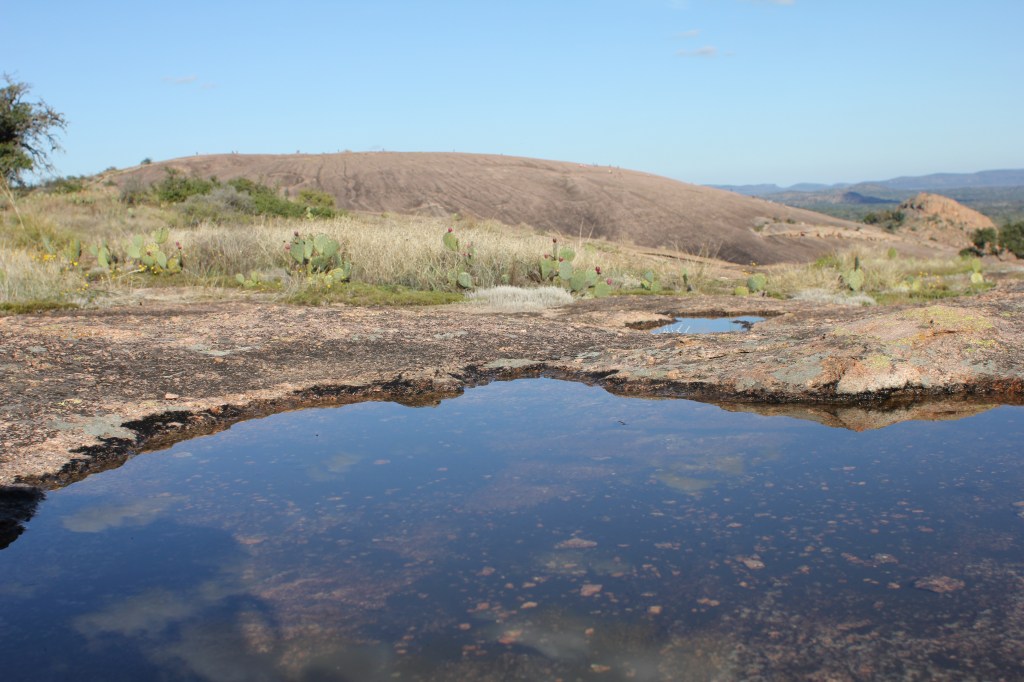
Obviously, you must hike to the top.  Spend some time taking in the view and looking at the micro-habitats in the depressions and vernal pools. 

Vernal pool. Looking at Enchanted Rock from Little Rock.

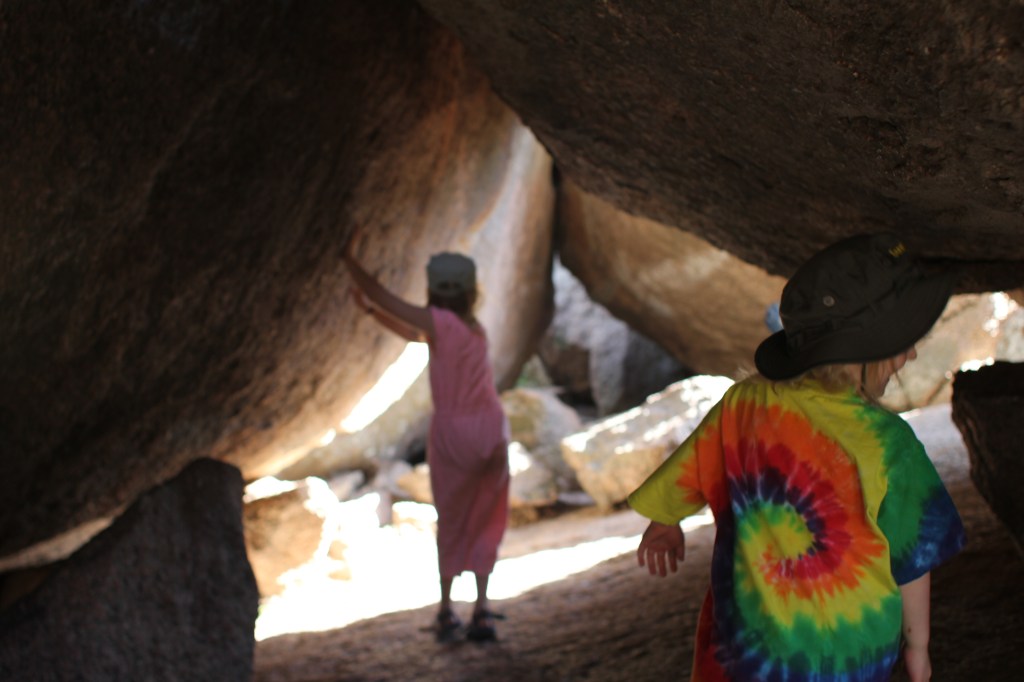
If you like caves, or have kids who like to climb, there is a fun area of caves under boulders just to the northwest of the highest point of the rock.  The climb through boulders is pretty safe, but it does get pitch black so bring a headlamp.  Not recommended for big boys or those afraid of small spaces. 

Little ones love the caves.

From the top you can descend off trail to the northeast and then meet the Turkey Pass trail and go around the rock.  You can also descend south and meet the Echo Canyon trail, which is a mini-oasis between Enchanted Rock and Little Rock.  There are caves suitable for kids among the boulders on the way to Echo Canyon. Be careful on the west side of Enchanted Rock, it drops off quick.  But if you have brought ropes, that is your spot.

One of great things about Enchanted Rock is that the terrain is open for off-trail travel.  There is much open rock.  Go explore Little Rock, or anywhere you want.  Just watch out for cactus.  There are also lots of Geocaches, which are fun to hunt especially if you have kids.

The park website includes an interactive trails map as well as a downloadable KMZ file of the trails.  If you use a mapping app, like Gia GPS, the KMZ file is great.

Car Camping

All the front country sites are walk in tent campsites. If you roll in a Class A towing an F-150 with a golf cart in the bed, this is not the park for you.  For tent campers, there are 35 walk-in sites.  I have spent quite a few nights here over the years and found the sites to be fine and the bathrooms well maintained.  Water is available.  Two nights is a good length of stay.  Sites are reservable six-months in advance and for high demand times (weekends Oct-April), the sites are booked many months in advance. 

Backcountry

Enchanted Rock is an ideal location for a first backpacking trip.  The primitive sites have pit toilets available and are a little over a mile from the parking lot.  If you need to bail, you can.  Watching the sunset reflect off the rock is a great way to end the day.  Moss lake is close to the backcountry sites, but there are no other water sources so you should pack in water.  Like the front country sites, the backcountry sites fill up early.

Rating

Enchanted Rock is a 5-star state park. It is one of the best in Texas and holds its own with great state parks in other states. Go have fun.

Biking with the Kids

One of our favorite family activities, particularly in coronavirus time, is the neighborhood bike ride.  I have taught all four of my kids to ride big kid bikes.  Along the way, I learned that there is a hard way and easy way to do this.  This post explains how to get the family riding.  Note: kid bikes and kid bike gear are normally available on Craigslist and in the preowned department of local bike shops – check there first for deals.

The Hard Way: Training Wheels

Like all kids in the early 80’s, I learned to ride on a bike with training wheels.  Not knowing anything else, I put my older kids on cheap training wheel bikes and let them ride around the street.  Training wheel bikes do teach how to pedal, but they provide a false sense of stability and interfere with learning how turning and leaning on a bike are related.  When you finally take the training wheels off there are going to be afternoons of crashes until the kid understands balance.  The training wheel approach will work, but it is a painful, brute force method.

The Easy Way: Balance Bike + Tiny First Bike

For my youngest, we got a balance bike and let her ride it in our house and on our deck. No pressure.  Just let it sit there and occasionally encourage them to pick it up.  Once they are scooting around, play a game of “I bet you can’t pick both your feet up at the same time.”  They will then pick up their feet.  Once they are doing short turns with their feet up, they are ready for a big kid bike.

Our balance bike. The pink Banana.

The first big kid bike should be a tiny bike.  For my 3-year old, I used a Woom model 2 borrowed from a friend of a friend.  This bike retails for $359, which is crazy expensive for a little kid bike.  They have a smaller model, the Woom 1, that retails for $199.  Still a lot of coin for a little bike.  But it’s worth it.  Here is what the Woom has that other, cheap kid bikes don’t:

  1. Its lighter.  Little kids have a hard time pedaling up even a slight incline.  Lower weight = better pedaling.
  2. It has a low seat position.  Lower seat = feet on short legs can touch ground = riding earlier. 
  3. It has a low center of gravity.  It feels like a balance bike, with all the weight down low.  This makes the bike easy to balance.
  4. It has legit hand brakes, so it trains safe braking on big bikes rather than coaster breaks (pedal backwards) which then require relearning braking when the kid graduates to a bigger bike.
The Woom 2

On the Woom, my daughter was riding on her own in 15 minutes, without a single crash. The other kids took hours and had lots of crashes.  A shocking difference.  There may be other kid bikes comparable to the Woom.  But I know that the Woom works. 

What age to learn?

The balance bike can be introduced shortly after a kid is walking.  The first two-wheel bike can be introduced when they have mastered the balance bike and are strong enough to pedal.  For most kids this will be around three years old.  Until then, there good options for family biking fun.

Ride with Mom or Dad.  Little babies (who can hold their head up) love being strapped in a kid seat on mom or dad’s bike and riding around the neighborhood.  Love it.  We used a seat that fits on a back of an adult’s bike, so the kid is sitting just behind you as you pedal. 

This is the Thule version.

These are well-constructed and with the addition of a helmet are plenty safe for cruising.  We have also used the on-bike child seats that fit on the handlebar stem. These work but are suitable only for tiny kids. If you have a chubster get the seat on the back. The on-bike child seats are generally better than bike trailers (we have owned both) because you can talk to your child in the seat and they are up high where they can see everything.  On-bike child seats are also more maneuverable on crowded bike trails.

The next step up is a tag-along bike which hooks to the seat post of an adult bike. These are awesome. Kids need to be strong enough to hold on and understand directions, so probably at least three. Even if a little kid is riding, the tag along is useful for longer family rides where a little kid might get too tired.  The tag along attaches via quick-release, so I just keep the mount attached to my bike.

Our tag along has hundreds of miles attached to my classic 1984 Trek 520

Go Bike!

Kids universally love riding bikes if biking is introduced in a safe and fun way.  There are few family activities with as much bang for the buck as cruising through the neighborhood.  So if you have kids but are not biking with them, get rolling!

Meditation

A lot has changed in a few weeks.  We all have unanswerable questions.  What will happen?  When will the lock down end?  Will we have jobs and be able to support our families in a few months?  We don’t know.

What we do know is that the world will go on.  The sand in the hourglass of our lives is still pouring. While much of the “news” about the current situation is negative – there is much to be thankful for.  Even amid this crisis, we are living in one of the best times to be alive ever.

Lots of people talk about living with grace and gratitude.  For me it is kind of like meditation – I see the value, but I have a hard time putting it into practice.  My body and mind wander. This whole situation have helped me with the gratitude thing.

Our shelter-in-place order allows for outdoor exercise.  On Saturday I went for a long run the length of the Barton Creek Greenbelt.  For those unfamiliar, the Greenbelt is a relatively rough trail that follows the canyon created by Barton Creek from the Barton Springs pool in Zilker Park to the Hill of Life.  While there is an “official” trail, there are plenty of side trails that allow one to get lost.  It is a treasure because you can almost feel like you are in the wilderness while in the middle of a big city. 

All alone crossing the creek.

On Saturday morning it was pouring rain, the trail was muddy, and it was fabulous.  There were very few people out, but those that were had a smile (from at least 6 feet away, of course).  While rolling down the trail in a rhythm jumping over rocks and logs, my mind focused on gratitude. Things that I am thankful for: my health, that I can move, that I get to run in nature in a downpour, that my lungs work and the feeling of redlining up a long hill, the dead tired feeling when I am done but have three miles to go, and, most importantly, that I get to come home to a wonderful family. 

Long runs by myself are about as close I get to meditation. 

Book Review: A cycling book that runners should read

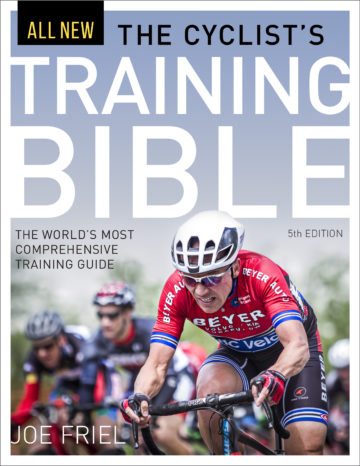
With a race on the calendar for August, I recently started the process of putting together my yearly training program.  I find this is always a good time to review my library of training books and see if there are any other resources out there that may be of aid.  A few weeks ago, I picked up a new book, The Cyclists Training Bible by Joe Friel.

The Cyclist’s Training Bible by Joe Friel

Although clearly targeted to cyclists, this book does a great job of explaining the principles of training and, due to the similarity of running and cycling, is easily adaptable to running-based pursuits.  Importantly, Friel does a better job of explaining key training concepts such as periodization, the components of fitness (aerobic capacity, lactate threshold, anaerobic capacity, and economy) and how to train each component than many running-specific books.  Much of the book is devoted to the understanding of volume versus intensity and how to incorporate each into specific training plans depending on individual circumstances. 

The book is organized into five parts, with part one discussing the benefits of systemic training and listing Friel’s “Ten Commandments” of training.  The author highlights the need for moderation and consistency in training, which in my observation are two of the most common pitfalls for runners.  In the first section he also raises the concept of “limiters” – weak links in physical and mental fitness that cap potential performance – and continues to hammer the point for the rest of the book.  He argues, correctly, that most of us spend way too much time working on what we are already good at and not enough time on our weaknesses.  Athletes with good endurance like long easy rides (or runs) but shy away from demanding interval work.  Strong athletes love hitting the weight room but find reasons to avoid long endurance efforts.  Athletes with poor economy do not spend time addressing form.  Friel argues that greater improvement comes from uncomfortably improving limiters than comfortably working on strengths.

The second part of the book is a summary of the science of training.  This is the section discussing fitness, fatigue, and how individualization, progression, overload and specificity should be programed for best results.  Part three addresses how purposeful training applies these concepts to the demands of cycling events.  Again, as endurance, force production and economy are components of running and cycling, these sections are directly applicable to marathoners and ultra-marathoners.

Part four of the book discusses how to put together a training plan for a cycling race.  Obviously, the actual training routines for cyclists differ from running workouts, but the deeper concepts remain the same.  From a physiological standpoint there is not that much difference between a 40-minute criterium or time trial on a bike and a 10k footrace or between a 6-hour bike ride and a 3-hour running event.  Friel explains why for shorter races one should build training blocks of volume and then intensity while in very long races one should train intensity before volume.  (Incidentally, this is one of the reasons marathon training does not work well for ultra-marathons).  Anyone with a modicum of running experience should be able to take these concepts and create their own training plan that will likely be successful.

The last part of the book focuses on strength, stretching, nutrition, and recovery.  Friel is an advocate of the weight-room and dedicating early-season training to strength.  He also recognizes the importance of real strength work, including barbell squats, even going so far as to state that riders should get their barbell squats up to 1.3-1.7 times bodyweight in the off-season.  I think this is great because most endurance training books either completely discount the benefits of strength or recommend exercises that are sub-optimal at improving strength (Hello Bosu ball!).  But I don’t think this book does the best job of preparing a reader who has never lifted for understanding strength or the mechanics of lifts.  For that you really need a dedicated lifting book.  Where this book shines, however, is how to incorporate lifting into the overall training plan from offseason, through training blocks, and to race day.

The discussion of nutrition is helpful but would be completely inadequate for someone training for an ultramarathon.  For a 100k or 100-mile race one really needs to read up on the specific demands of ultramarathoning.

If you are the kind of person that just wants a training plan but has no interest in the scientific principles behind the plan, the book is not for you.  But if you are your own coach and want to maximize efficiency in training, The Cyclists Training Bible is great resource for any endurance athlete. 

Inflation Crisis

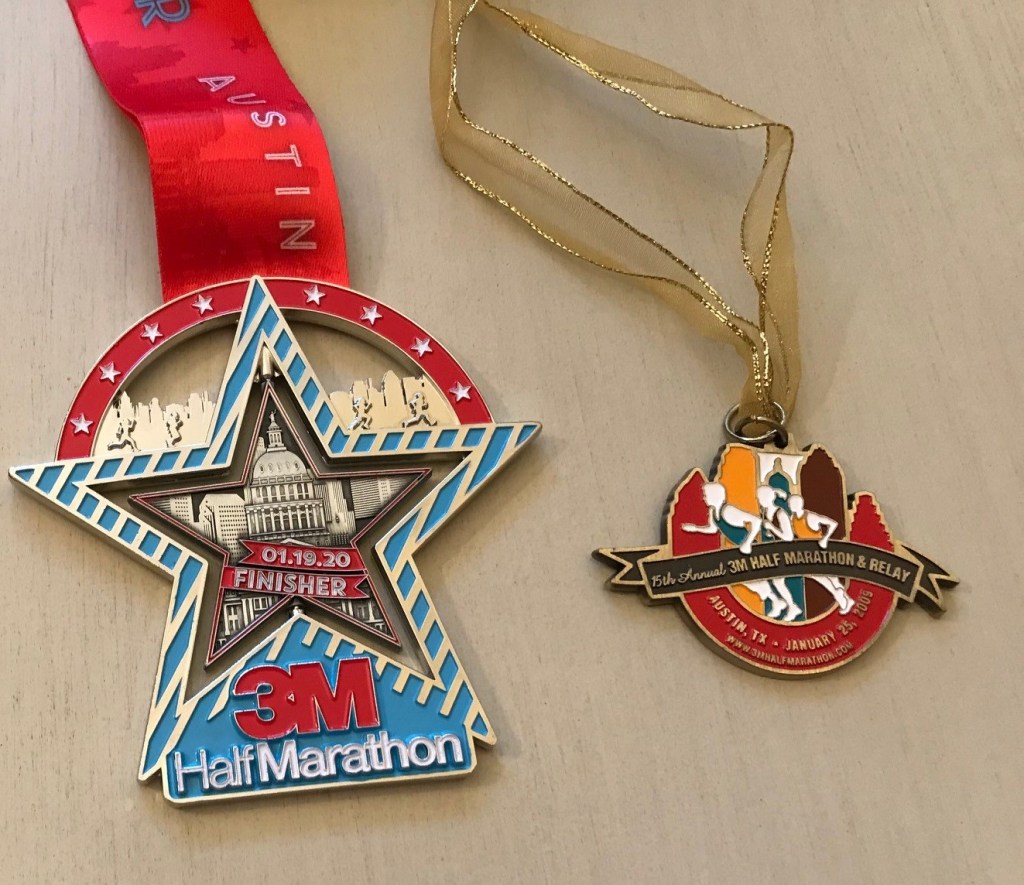
Short get off my lawn post. My wife bought a display rack to hang all our old race finisher medals.  My task was to mount it near the laundry room.  For a few years we tried turning old race medals into Christmas ornaments, but each season the branches drooped more and more.  Today we had all our medals laid out on the table.  A cursory inspection of a decade of finisher medals shows an unsustainable trend of medal inflation.

Here is a photo of the 2020 Austin 3M Half Marathon medal compared to the medal for the same race in 2009.  In a decade this medal went from a tastefully modest accoutrement to something that looks like Flava Flav’s clock.

The original ribbon on the 2009 was lost during the ornament experiment.

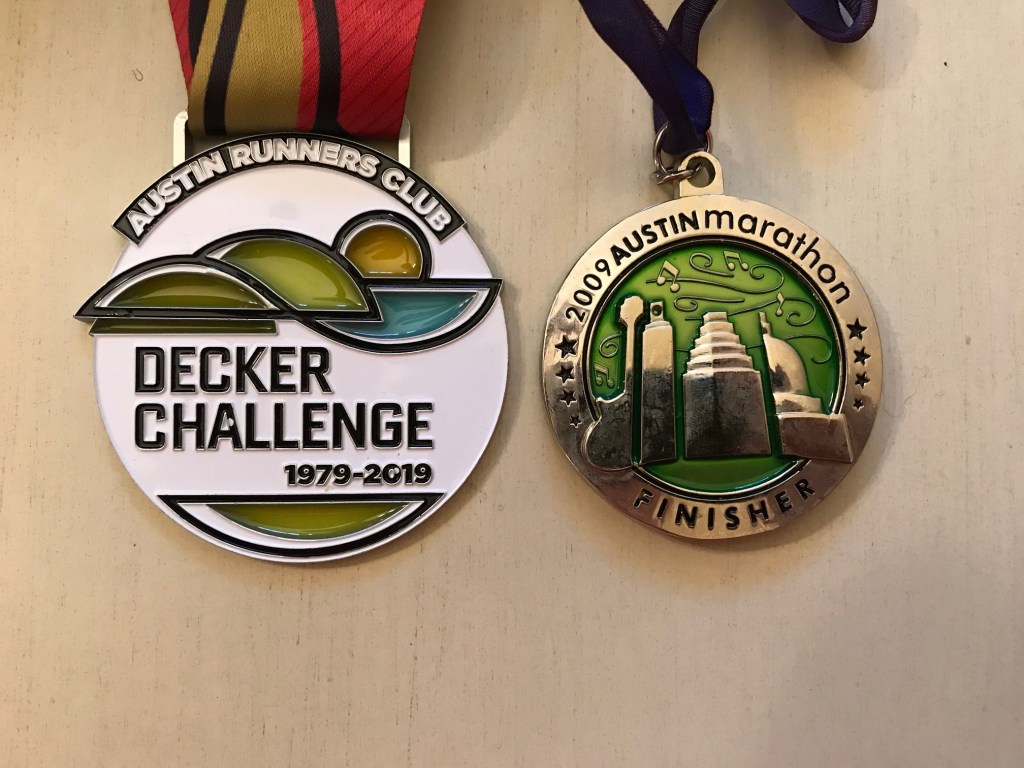
Half-Marathon medals from the current era dwarf marathon medals from a few years ago.  On the right is the 2009 Austin Marathon finisher medal.  On the left is the 2019 medal from the Decker Half Marathon in Austin.      

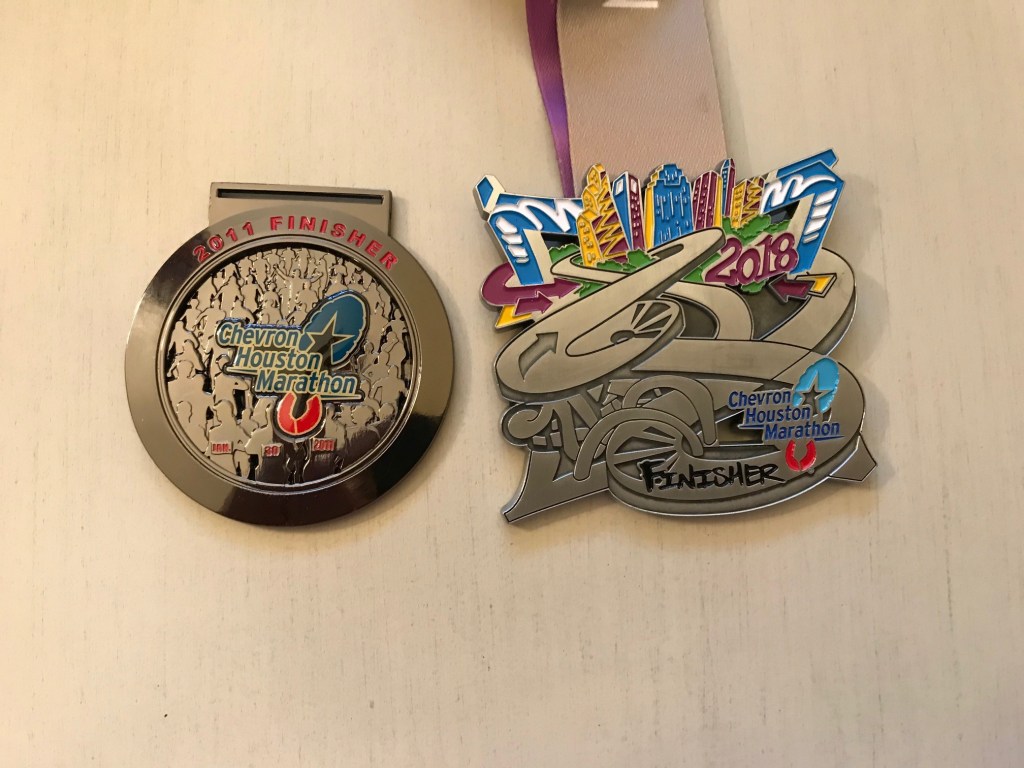
Its not just Half Marathons.  Here is a comparison of the rapid inflation of the Houston Marathon medal between 2011 and 2018.

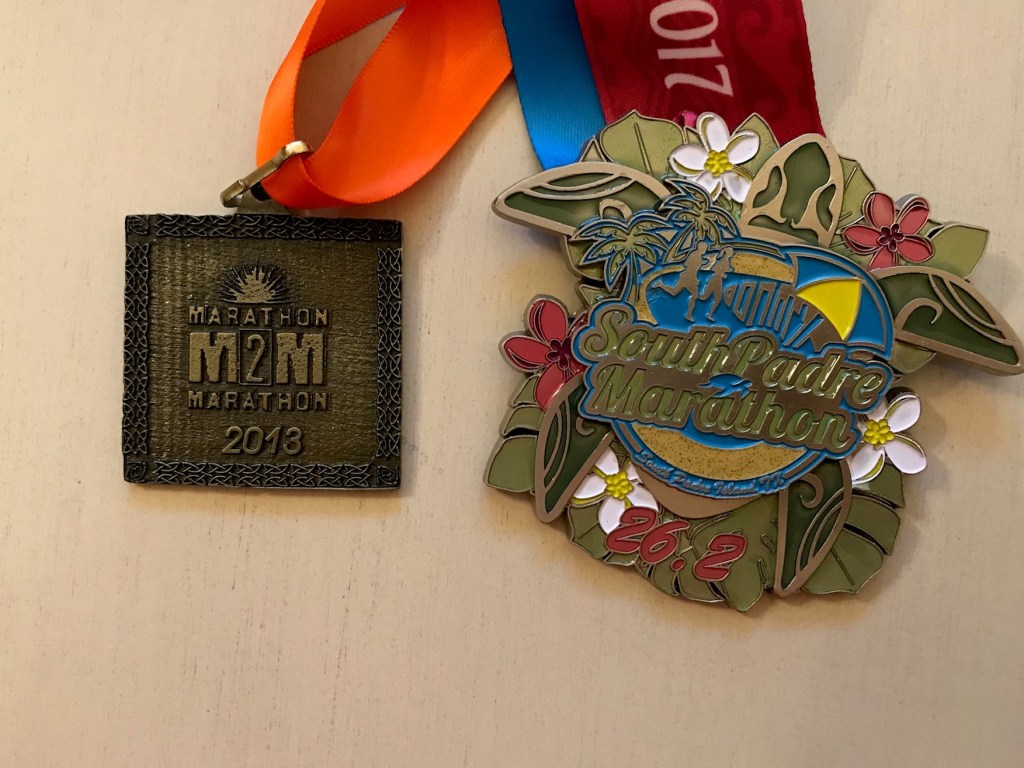
Even obscure races are not immune.  Here are two of my wife’s medals from two small Texas marathons, the 2013 Marathon 2 Marathon and the 2017 South Padre Marathon.

What has been driving this trend?  Do runners demand gigantic finisher medals?  By giving out metal dinner plates is the race …. compensating for something?

I think this is an opportunity for the best races to separate themselves by returning to normal size medals.   If you have the real goods, you don’t need to brag.  But I suspect that the trend of ever-increasing size for race medals will track the ever-increasing size of everything else in American life.  That will leave us with a bunch of medals that are too big to do anything with, other than hang on a rack by the laundry room.

Put down the phone and nobody gets hurt

I have a problem.  I spend way too much time with my phone.  So, nothing I write here is a judgment of anyone.  My house is made of glass.

What I want to talk about is the problem of distraction and why phones specifically impair training. I discovered this while lifting.  My practice had generally been to take my phone with me to lift weights.  I justified it because I could enter my workout into Strava as I was lifting to keep a record of what I was doing.  I would also listen to music or maybe a podcast.  Of course, I would have to check messages and the latest Breaking News!!! between sets. 

One day I left my phone in the car.  Bang, I crushed the lifts.  What had been hard was easy.  Instead of distractions I used the 3-5 minutes between sets focused on the next set.  Now when I show up at the gym, I am a man on a mission.  I don’t talk to anyone, I focus on what I am going to do, and then move the weight.  If I must record my workout, I bring a small notebook and a pencil.  Get in, blast it, then get out. The same approach works great for intense endurance workouts like track repeats, hill sprints, and fast tempo runs.

Why does leaving the phone at home help?

Phone use leads to poor posture which leads to poor performance.  A 2016 study looked at the effects of talking and texting during exercise on postural stability. It concluded that talking and texting impaired posture, negatively affected performance by dividing the brain’s attention between tasks, and predisposed individuals to injuries.  There is also some evidence that “power posing” – standing like an alpha gorilla – increases short term testosterone and decreases cortisol.  A 2012 TED talk discussed the importance of posture and summarized research indicating that even two minutes of good posture can increase risk taking and confidence.  To run and lift like Superman, stand like Superman, not like a 95-year old grandmother over a phone.

Random guy who did not just check Instragram.

Phone use also hurts mental focus.  This key point goes beyond texting, talking, and browsing the internet and includes listening to music.  The main reason we listen to music (or podcasts or audio books) is to distract ourselves from the work at hand.  The problem is, we cannot produce max-effort intensity with a distracted brain.  Example: Say we are doing 800 repeats.  We have a goal interval time for each 800.  600 meters in, with burning lungs and heavy legs, our mind needs to focus on hitting the goal time, not on a Bon Jovi song or discussion by Joe Rogan about whether UFOs really exist.  Embrace the pain.  Own it.  Teach your body that your mind is in charge.

Phones also cause distraction which negates the zen of long endurance.  This is something that I really did not appreciate until I started running without a phone or music.  Without distractions running can become almost like a type of meditation.  I have never had the patience for meditation, but on some long runs I am mentally almost able to observe what I am doing from the outside.  Its hard to explain, something that happens on long runs with just you and your mind.

Finally, leaving the phone makes your workout simpler.  As with life, simplicity in training is usually better.  We live in a society that constantly pushes us toward unnecessary complexity and teases us with the prospect that buying something can make up for dedicated training.  Thus, we see 4-hour marathoners running in $300 Nike 4% shoes, guys with bellies on $7,000 bikes, and people who have never been under a bar pulling 30 pounds on the cable crossover machine.  The answer is not technology, its doing the work. Anything that distracts from the work should be left at home.

Exceptions As with all rules, there are exceptions and situations where it may be smart to bring a phone. My exceptions include:

  • Where it is only used as a GPS;
  • Long, easy runs where intensity is not important;
  • Races (in a pocket) for coordinating with friends and family at the finish line;
  • Bike rides (in a pocket);
  • Ultramarathons, with the Gia GPS app and the race route saved to aid in routefinding; and
  • Ultramarathons, where I have saved audio on my phone specifically for motivation during the inevitable depression times. There is nothing like Goggins or Jocko’s “Good” to help you move.

Give it a shot. If you, like most of us, are inseparable from your phone, I encourage you to take a month and do all of your workouts sans phone. I doubt you will miss it.

Decisions, decisions…

Never half ass two things when you can whole ass one thing.

– Ron Swanson

Ultrarunning is no longer under the radar.  Events that spent decades as the province of just a few dozen crazy people now have thousands of even crazier people trying to get in.  The most popular races have lotteries, with qualifying races to enter the lottery, and some of the qualifying races even have their own qualifying races.  If you did not get a ticket for your race or are just getting into the sport, now is the time to decide what you are going to do before everything fills up for 2020.

So what to do? My advice:

1. Only sign up for a race that makes you excited to run.  Do you like to run up and down mountains or do you like fast and flat?  Do you like the logistics of coming back to the same place or do you hate loops? Does marching up a trail at 3 am sound like a challenge or does it sound miserable?  Genuine enthusiasm makes up for a lot and makes the work preparing for a race easier.  Look at the course, read race reports, and ask: does this race get me excited?  If not, move on.

Terrain I find … interesting.

2. Pick a single race as your point of focus.  The best runners in the world, those who’s only job is to run, usually pick one “A” race for the year.  Some recreational runners run crazy numbers of races.  While that is fine, it comes with the tradeoff of never truly running a great race.  A truly great race takes months of smart, targeted, and dedicated practice, supreme mental focus, and leaving everything on the course.  A max effort race – whether a marathon or ultra – should take months to fully recover from. 

This guy does not run a race every other week. Photo by Dennis Barthel.

2A. As a corollary to #2 above, its OK to have a “B” race that is used to train for the “A” race.  A half-marathon before a marathon, or a 100k before a 100-miler can be great training IF the runner avoids the temptation to go all out in the training race. Finish those with gas in the tank. 

3. Whole-ass the race.  When you toe the line, you should be in top shape, have done your training, and mentally expect to achieve success.  You must know deep down that you are going to crush the course.  To do that, pick a race that gives you plenty of time to train, with gradual build-up in volume to avoid the classic runner overuse injuries.  How much time is enough?  It depends on the athlete and the race.  A complete novice wanting to run a marathon should plan on at least six months of training.  A novice wanting to finish a 100-miler would probably be best served by developing a two-year plan, with the first year focusing on a good 50-miler or 100k.  A veteran probably already knows what they need.  For me, starting from a good base, I want at least 6 months – preferably more – for a 100k or 100-miler and at least 4 months for a marathon. 

4. Consider whether you want to run the race with a buddy.  Ultramarathons are substantially more difficult to do completely alone – thus the popularity of crews and pacers.  An alternative to pacers, provided you can find the right person, is running with a friend of comparable ability.  Sometimes you will be the weak link.  Sometimes they will be the weak link.  But the overall chance of success, particularly at 100 miles, is increased by having a dependable teammate.  Some races with a lottery, like UTMB, allow you to enter as a team; you either both get in or neither gets in.  Thus, if you want to run with a friend, check the race entry rules. 

5. If you have a long-term bucket-list goal race – like the Boston Marathon, Hardrock, Western States, or UTMB – consider what races will allow you to qualify.  For marathons, its pretty easy to find a qualifying race.  The hard part is making the cutoff.  If you want to qualify for Boston or another marathon with a qualifying cutoff, find a fast course with a good chance of cool weather.  For ultras, it’s more difficult.  Many 100-mile races require a previous finish of a 50 or 100-mile race.  UTMB requires you to amass a certain number of points in a certain number or races over the prior two years just to get in the lottery.  Western States has a list of specific races and times that qualify for the lottery.  Hardrock has a much shorter list.  Unlike the Hunger Games, the odds are never in your favor and it will realistically take many years of entering these lotteries to obtain entry.  So, if you want to run these races, pick the races that qualify for multiple big boys.

RaceHardrockWSUTMB 6-Pointer
APRIL: Ultra Trail Mt Fuji (Japan)YYY
MAY: Hardcore 100 (Philippines)YYY
MAY: Cruel JewelYYY
JUNE: BighornYYN
JULY: Hardrock HundredYYY
AUG: UTMB (163 km)YYY
AUG: Fat Dog 120 (Canada)YYY
AUG: Angeles CrestYYY
AUG: Cascade CrestYYN
SEPT: Wasatch Front 100YYN
SEPT: Bear 100YYY
SEPT: Run Rabbit RunYYN
SEPT: IMTUFYYN
OCT: GrindstoneYYN
Here is the list of races that are both Hardrock and Western States Qualifiers, with the races that also count for 6 UTMB points indicated. It’s a short list.

6. The race must fit in your life.  I have a job, four kids, and a busy life.  Some races, however awesome, just are not happening right now (I am looking at you Grant – we are running Comrades one day but I can’t this year!).  Pick something that fits with your schedule/budget/family life.  There are thousands of possibilities, just find the ones that work for you.

I love my constraints.

7. Understand that you don’t have to officially race to find an adventure.  Some of my most fun adventures involve remote off-trail backpacking in wilderness areas.  These adventures can be as strenuous as you want, and except for the cost of getting there they are free.  There are also many “unofficial” courses like the Rim-to-Rim-to-Rim, Wonderland Trail, Nolan’s 14, and the Pfiffner Traverse, and various mountain High Routes.  Don’t feel confined to races if you want to try something else.

Not a race, but still an adventure. (Wind River Mountains 2018)

What did I decide?

For 2020 I signed up for the Castle Peak 100k. I had never heard of it until a few weeks ago and I started researching races.  Here’s how I applied the criteria above to pick this race:

  • Is it Interesting? – Lots of vertical, part is so technical it uses ropes and required a special waiver, you get a belt (not a buckle) for finishing – cool, and it’s in Tahoe which is both beautiful and easy to get to. 
  • Is it a big enough challenge to be the focus of my training?  Yep.
  • Can I whole-ass it? Yes, lots of time to execute a training plan and toe the line it top shape.
  • Qualifiers?  It’s a Western States qualifier.  Finishing will get me 16 lottery tickets.  Yeah.
  • Buddies? Likely running with friends (if they sign up before it fills out).
  • Other non-race plans?  In the works.

What should you decide?

I don’t know.  But if you spend some time researching races and applying these criteria, you should be able to find something to occupy your time this year.  If you have any questions leave them in the comments below and I will try to answer them.

Finding your grasshopper

This week I attended funeral for a family friend who passed away after a 10-month battle with pancreatic cancer.  She was 69, had a full family life, owned and ran her own business, was an involved citizen and a devoted member of her church.  She dealt with impending death with courage and grace, they way we all hope to when the end comes.  While she was not young, she was active and in shape, constantly biking around town and going swimming.  She could have reasonably expected another 20 or 30 years.  But due to something outside her control, that did not happen.

We have free will, and attendant responsibility for our lives, but there are lots of things that we can’t control.  Every day we should remind ourselves that there are no – I mean ZERO – guarantees.  This might be our last day, our last Christmas, the last time we talk to a friend, the last time we hug our child.  Reminding ourselves of these facts is not morbid, but it lets us get the most out of the time we have.  And that time is always decreasing.  Is there something that you want to do in this life?  Then you better do it.  Or it may never happen.

There is an old Aesop fable about the ant and the grasshopper.  The grasshopper sings all summer while the ant works tirelessly to gather food.  Winter comes and the grasshopper has nothing to eat and dies while the ant has plenty to eat.  The moral is work hard and plan for the future.  Good lesson.  But what if the ant gets caught by a spider in September?  Then who made the better choice? 

I think we all need to be a blend of the ant and the grasshopper.   But as I get older I lean more grasshopper.  My wish for us all is that we have the courage to take the chance and do the things we want to do.  Be in the moment with our loved ones, because there will be a time when we will give anything for that moment.  Put down the fucking phone.  Feel the wind on our face.  Go on that adventure.  Take up that challenge. 

Or don’t.  Either way, it’s our choice.