Austin Troop 33 has a rugged tradition of heading to West Texas every January over MLK weekend for a mini-high-adventure. This year, we were back at Big Bend NP.
The national parks rules and regulations increase the complexity of scout adventures in Big Bend. For this trip we needed to obtain a “Special Use Permit” months in advance, which authorized the general troop activities. Then we had to come up with itineraries that complied with the Park’s group size limits, which prohibit more than one group of 15 people camping in any two adajent backcountry zones. Because the Chisos Mountains are a single zone, this effectively means that only 15 people from a scout group can camp in the Chisos backcountry on any one night. Big groups need to split up into different areas of the park.
About 40 people from Troop 33 went on this trip. Our beginning backpackers (all middle school scouts and parents) spent Saturday night at basecamp at the Chisos Group campground, then hiked to the Southeast Rim on Sunday. Our older scouts were all high schoolers who had already been to the south rim and Emory Peak and were looking for another adventure. So we planned a canyon packraft trip.
Originally, we targeted Mariscal Canyon because it offered a challenging 11-mile hike up Mariscal Mountain, followed by a float back to Solis. But speaking with a ranger in December, it was questionable whether River Road East (which had been damaged by July flooding) would be open. So we switched the plan to float Boquillas Canyon and hike out via the Marufo Vega Trail.
Boquillas Canyon is the easternmost canyon in Big Bend. NPS has special river use regulations that apply to overnight trips. Notably, the regulations require a wagbag, a spare paddle, and a fire pit, whether or not you plan to have a fire. Permits for these trips are not available in advance, but must be picked up at the Panther Junction Visitor Center the day before. I was able to get the permit on Friday, but the ranger I spoke with did have some hesitation due to the weight of the boats and the strenuous nature of the Marufo Vega hike out. The ranger also required us to put in at Rio Grande Village, rather than following the dry wash off-piste from the Marufo Vega trailhead.
With pemit in my bag, 15 of us headed to Rio Grande Village Saturday moerning and unloaded the packs. The drivers did a quick 4-mile shuttle to drop three at Marufo Vega then everyone inflated boats at the Rio Grande Village boatramp. Other than my two packrafts, all the other boats were rented from Backcountry Packrafts.
The first 6 miles on the river from Rio Grande Village to the mouth of the canyon were brutal, with increasing winds as the day went on. The USGS gauge was reading about 130 cfs, which is about as low as I would want to run it. In a few places we had to get out and walk the boats. The more pressing issue was the wind exposure in long flatwater sections, which blew the packrafts around.
As we neared the mouth of the canyon, the wind gusts increased to over 40 mph. With such strong winds, it was not possible to enter the canyon, and for a few minutes we were all pinned in mud and quicksand on the Mexican bank. With about an hour before sunset, we crossed the river and deflated our rafts. The scouts found a flat area in the scrub and decided to set up camp. As we went to bed, I thought there was about a 90% chance that we would be bailing in the morning.
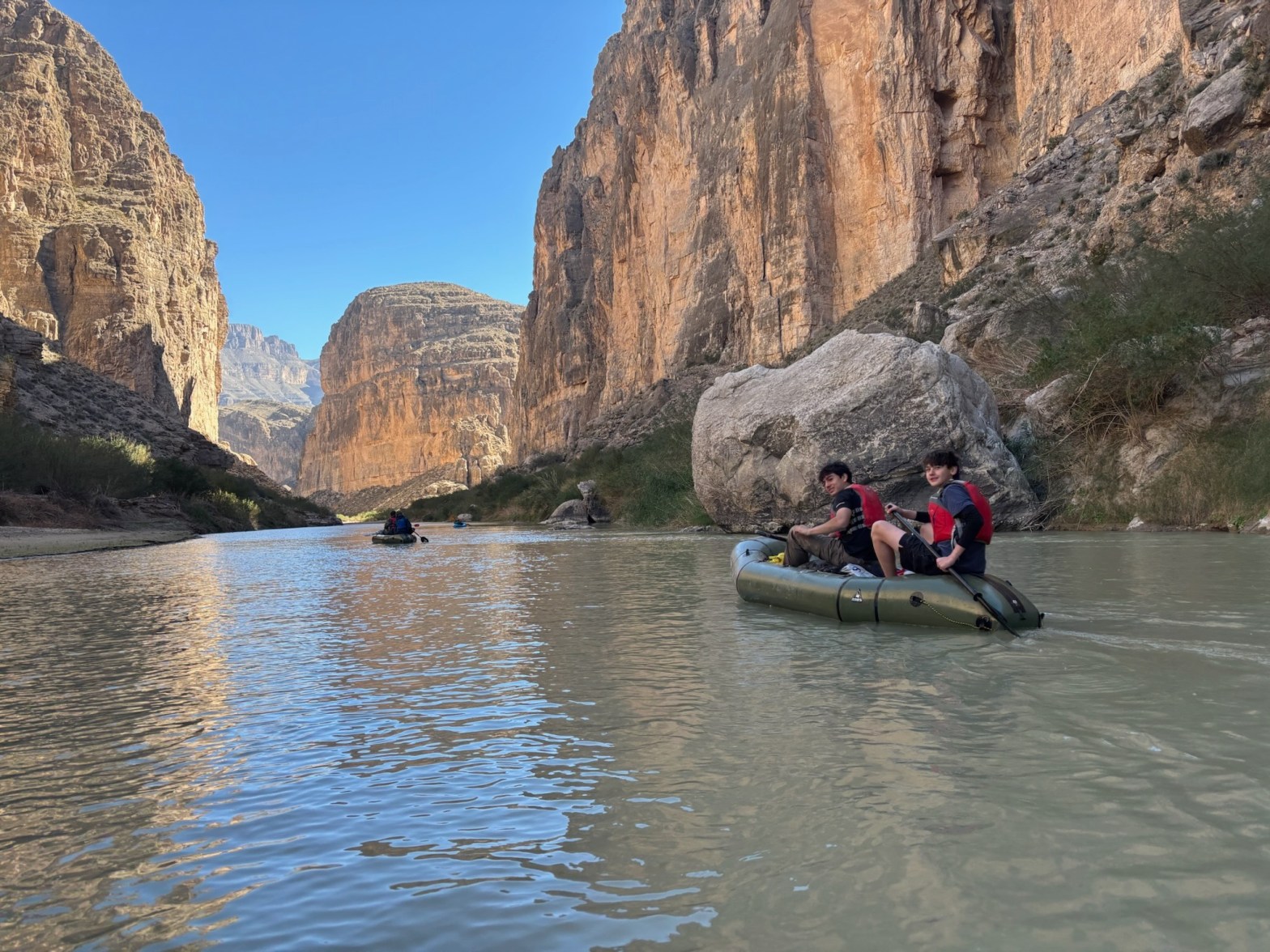
We woke up with sand everywhere and frozen dew on our sleeping bags. But there was no wind. The boys voted to keep going, so after coffee and breakfast we inflated the boats and paddled into the canyon. Boquillas Canyon is simply spectacular. It took about 5 hours to float 9 miles of the canyon, and we took out on a gravel bar near the north spur of Marufo Vega. After a late lunch, we reloaded packs and headed up the trail back to the car. This was my first time on the Marufo Vega, which has somewhat of an infamous reputation. While steep, I found it stunning and may be one of the best trails in the park. However, I can see how someone who does not know what they are doing could get into real trouble in hot weather.
By the time all of us got to the trailhead, the stars were out on a moonless night. We did a “roses, buds, and thorns” talk in the dark, watching the shooting stars. Surprisingly, there were almost no thorns, and some of the scouts said the wind, which almost ended the trip early, was their rose because it taught them to keep going.
Overall, floating in Boquillas Canyon was awesome. But it is not a trip for beginners, younger scouts, or inexperienced adults. Gear must be dialed in and very light (most of us did not take tents) because of the added weight of boats, PFDs, and paddles. Groups need people who understand river safety, backcountry navigation, first aid, and gear repair. But for those with those skills, a canyon float is an opportunity to explore one of the lesser-traveled and amazing parts of Big Bend.
 Vamonos Baby!