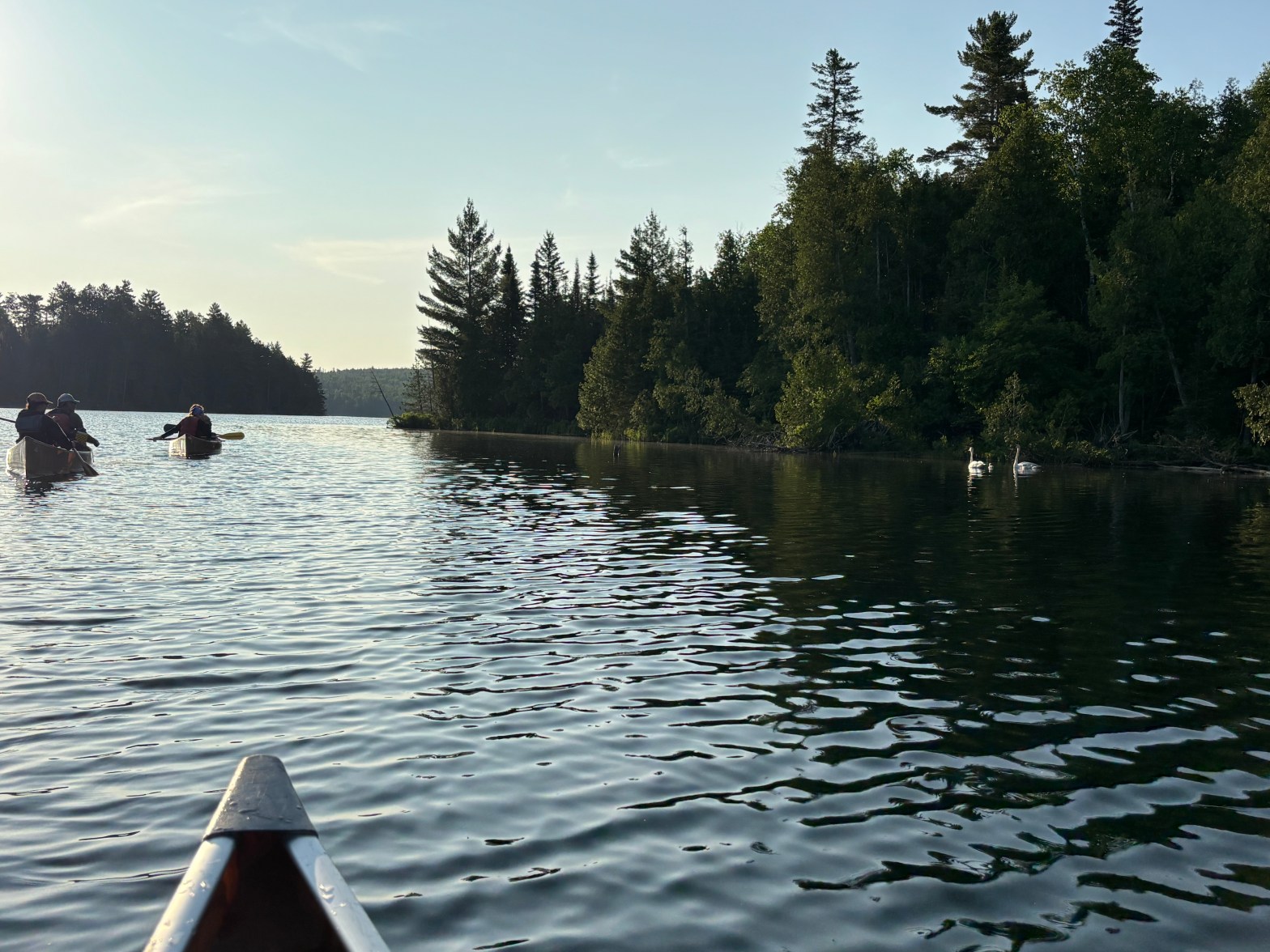
For me this is the summer of scout canoe trips. Last week my oldest daughter and I went on a week-long canoe trip in the Boundary Waters of northern Minnesota with a crew from Troop 19 in Austin. Instead of using a private outfitter, we booked our trip with the Northern Tier High Adventure Base.
The Northern Tier base is located approximately 20 miles east of Ely, Minnesota. It is about four and a half hours of rolling time from the Minneapolis airport. Travel was pretty simple with a direct flight from Austin then renting a minivan for the drive.
Like the other hight adventure bases, Northern Tier has its own check in procedures. We arrived late in the day and our “Interpreter” – the young person who would accompany us on our trip – started moving us through the process. We had a tasty dinner in the dining hall that evening and slept in cabins on site.

Gear
The first thing we did was take a crew picture and conduct a gear shakedown to ensure everyone had the required equipment. Those equipped for backpacking trips likely already have most of the equipment. One item of note is that Northern Tier requires boots or shoes with ankle support during the trek, and sneakers or other closed-toe, closed-heeled shoes for camp (no Crocs, flip-flops, etc.). Some of our crew did not have these, but were able to purchase them at very reasonable prices at the Northern Tier camp store.
After a week on the water, I have some thoughts about what is genuinely needed for clothes. It’s a short list.
- One “wet” outfit for the week consisting of high-top shoes, synthetic socks, lightweight, quick-drying long pants, and a long-sleeved synthetic shirt. I wore this every day, and each day went swimming in this outfit. The long sleeves are vital for sun and bug protection.
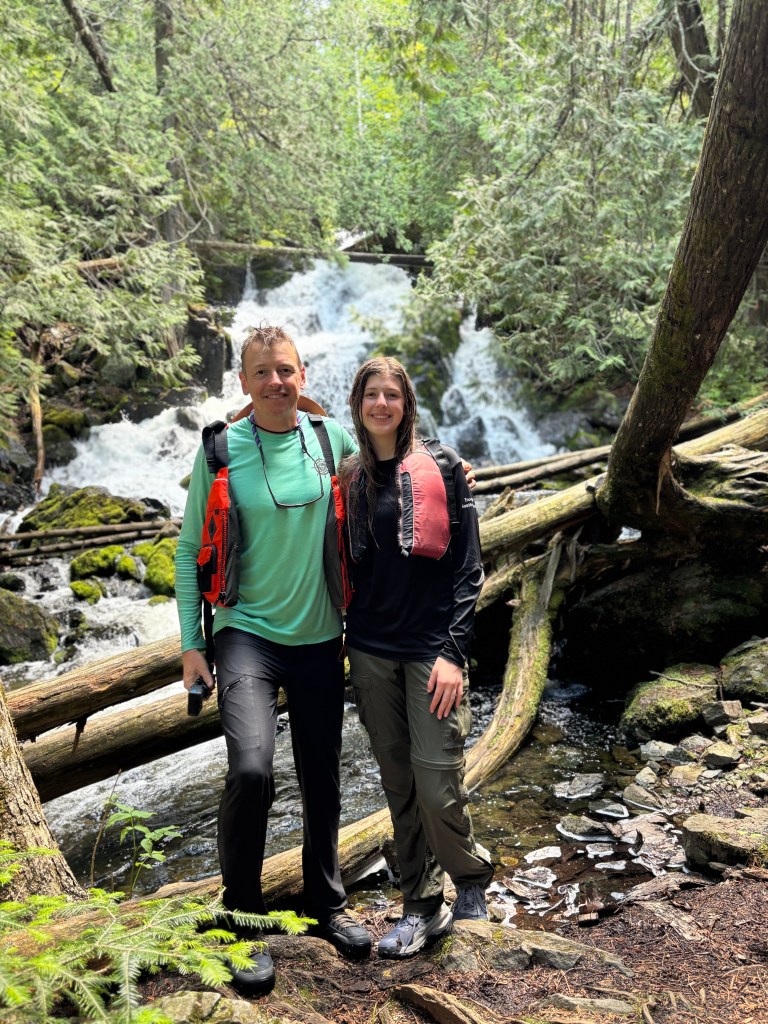
- One dry camp outfit consisting of lightweight pants, a long sleeve shirt (mine was lightweight merino which helps with odor), light trail runners. You could also include socks, but I generally went sockless at camp to let my feet dry out.
- One set of sleep clothes consisting of lightweight shorts and a merino t-shirt.
- One lightweight fleece and one lightweight warm hat.
- Ultralight rain jacket. Note: I only used this in camp, as a rain jacket would be too hot while paddling and would be irrelevant since I was already wet anyway.
- Sun hat, buff, and headnet.
That is it for clothes – there is no need to bring anything more. I treated my clothes with Pemetherin before leaving home, and I think it really helped with the bugs.
For other personal gear:
- Headlamp – I never used this as it was light until 10 pm and dawn was just after 4 am. Still bring one for nightime emergencies.
- Small battery pack and cords to recharge my GPS watch and phone.
- Travel toothbrush, floss, deodorant.
- Ultralight travel towel.
- Sunscreen and Deet.
- Backpacking sleep pad and 30 degree or warmer lightweight sleeping bag, and an optional pillow.
- Ultralight backpacking chair or sit pad for camp.
- Personal PFD. The provided PFDs are perfectly fine from a safety standpoint, but I like having a PFD with pockets so I brought my own.
For crew gear, we used what Norther Tier provided, including tents. Each adult was in their own 2-person Alps tent and the scouts shared a 4 person Alps tent. The tents are high quality, but heavy compared to backpacking tents.
The Northern Tier equipment is generally heavy and old school, but functional. The stoves are MSR Whisperlite white gas stoves, and the pots include heavy items, such as steel griddles. The food and crew gear are transported in two cube-shaped robic sacks lined with heavy-duty plastic bags.

The personal gear and tents were carried in large “grey whale” robic sacks. Each canoe had two of these big bags. The bags are frameless and heavy (probably 75 lbs on average) and are much, much less comfortable than a backpacking backpack.
I have been to the Boundary Waters before with a private outfitter and was given similar equipment, so I think it’s a regional outfitting trend, not a Northern Tier-specific one. For a first trip, I suggest just accepting what they provide and going with the flow. The only exception to this is that crews with adults who appreciate coffee, tea, and hot drinks multiple times a day should bring an ultralight canister stove or JetBoil, as using the MSR Whisperlite white gas stoves is a pain.
Choosing Our Route
Northern Tier took care of obtaining the required Boundary Waters permit, which simply authorized us to enter at the trailhead on Moose Lake, which is the site of the Northern Tier camp. The permit does not specify campsites – they are all first-come, first-served, and each crew has the freedom to plan its own route anywhere in the Boundary Waters. We told our Interpreter that our priorities were: (1) getting away from lakes where motor boats are allowed, (2) solitude, (3) wildlife, and (4) fishing. As for the level of challenge, we were open to a route that involved portages and some difficulty. The evening we arrived we planned an itinerary that would take us to the northeast of the base, generally following the US-Canada border on a series of larger lakes, with a return trip through a chain of small, remote lakes accessible only by difficult portages. We purchased maps and a waterproof map case at the camp store, obtained our permit, and went to bed.
The Trip
The Boundary Waters are a unique region comprising thousands of interconnected lakes, linked by waterways and portages. Over six days and five nights, we covered 50 miles with 19 portages. We saw bald and golden eagles, baby loons and baby swans, and even a baby beaver. The US Forest Service has established campsites, each with a fire pit and “grumper” pit toilet in the woods. The scenery was spectacular, and every campsite is on the shore with awesome views. Water temps were in the 60s, and I swam every day.

The physical demands of a Boundary Waters trip should not be underestimated. A challenging Boundary Waters route is harder than most anything at any other high adventure, including Philmont, due to the portages.
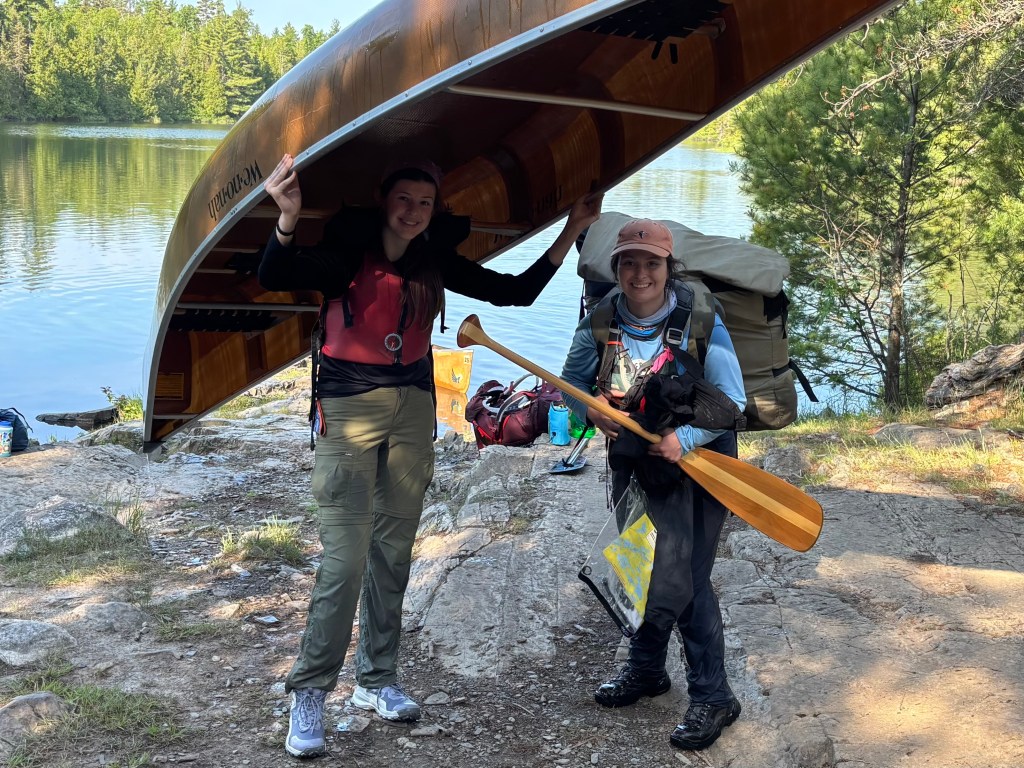
The portages we took ranged from a few yards to a half mile over mud, slick rocks, and mosquito-filled forest. To avoid double portaging (making two trips), the other dad and I had to each carry a heavy pack and a canoe. We had paid extra for kevlar canoes, which at 40 lbs are lighter than the aluminium canoes, but were still a challenge as our total weight was over 100 lbs. Much of that weight was directly on our shoulders becase the packs are frameless. Shoulders and backs feel the burn. Were I to go again, I would include farmer walks (carring heavy dumbells) and lots of shrugs in my training regimen to specifically target the traps.
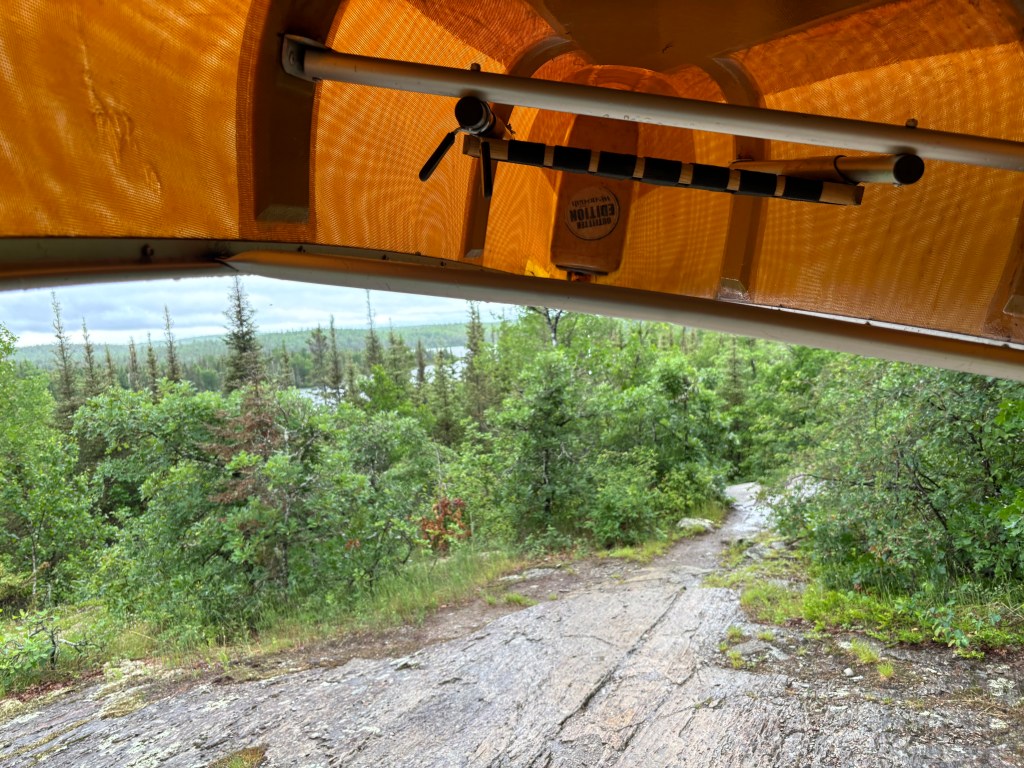
The Northern Tier is challenging enough that I would hesitate to take adults or scouts who cannot carry at least 75 pounds on the trip. I would not go with any adults or scouts who are mentally weak or shirk from hard things and don’t know how to hustle. Northern Tier is not a good fit for mentally soft people. This trip is for those who are willing to embrace Type 2 Fun, those who love paddling into 30 mph wind with rain, those who love the struggle of carrying a heavy load for what seems like an eternity. Fortunately, my crew embraced the challenge, and the scouts had a blast in dealing with the worst of the conditions.
Interpreter
The Interpreter is really a guide to help crews plan and execute their trips. Our Interpreter pushed us to be at camp by late morning or mid-day. We were usually up early and on the water by 5:30 or 6 am. Given how early the sun rises, I did not mind the early starts. However, I did not like the “rush” to get to a campsite. On several days, we passed through interesting areas, and I would have liked to slow down to appreciate the lakes and fish. Particularly in the more remote areas, there were tons of open campsites. Even in the popular areas, campsites were available as late as 4-5 pm. So I think the rush is unnecessary as long as crews understand they may not get their first choice.
The role of the Interpreter is interesting. I can see how an enthusiastic interpreter might be helpful for some crews. But for us, our Interpreter ended up creating some personal conflicts and injected some challenging dynamics. Our crew was also experienced with wilderness trips, with every scout and two of the three adults having been to Philmont, and I having previously visited the Boundary Waters. I would have preferred to get route advice before we left and then take the trip with just our adults and scouts.
Will I go back?
Yes. With three other younger kids in scouting, I am confident that I will be back in the Boundary Waters soon. However, when I return, I don’t think I will do a standard Northern Tier trek, but instead will just rent the canoes, PFDs, and paddles and bring everything else. Northern Tier offers à la carte equipment rental to crews with an adult who has participated in a traditional trek in the last three years. Private outfitters offer similar options. A trek planned this way is cheaper the crew will be lighter and faster.
 Vamonos Baby!