
I just returned from a nine-day trek at Philmont Scout Ranch with my son’s scout troop (Austin Troop 33). It was great fun. This is the first in a series of posts on what to expect, how to prepare, and vital tips for a successful Philmont trek. At the end of the series, I will summarize our specific trip and the pros and cons. This post is a basic overview explaining how Philmont works and how it differs from other high adventure opportunities.
What is Philmont?
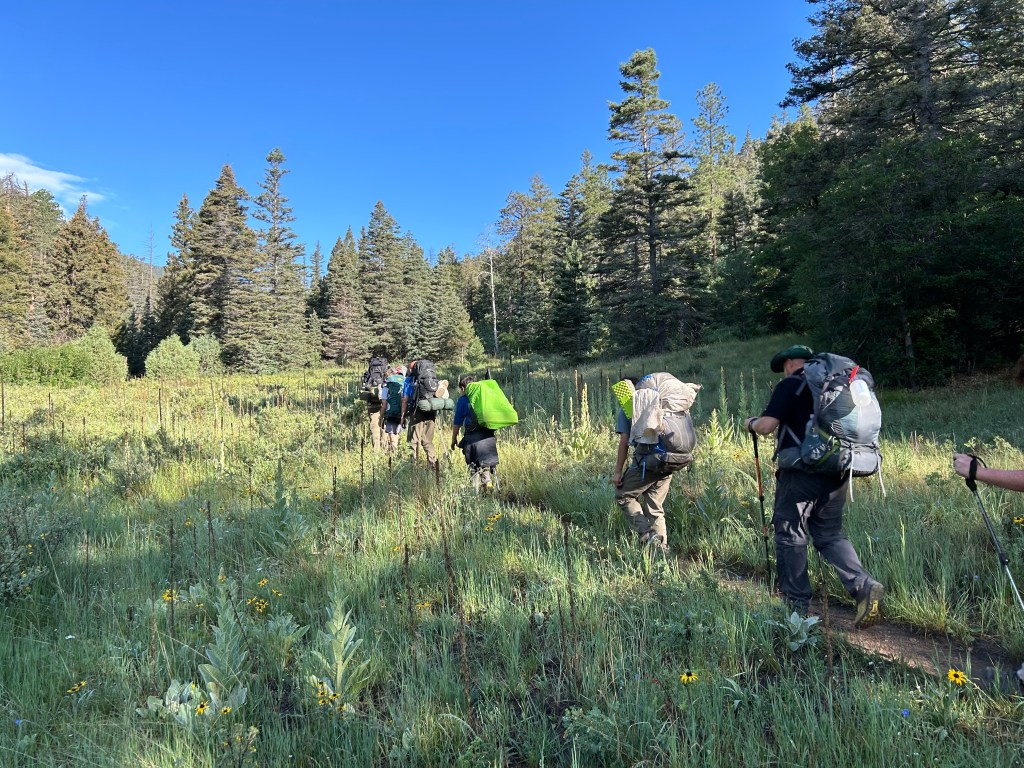
Philmont Scout Ranch covers approximately 140,000 acres in the Sangre de Cristo Mountains near Cimmaron, New Mexico. Elevations range from about 6,000 to over 12,000 feet, and the terrain includes open grasslands, pine forests, burn scars, and alpine tundra. Oilman Waite Phillips donated the property to the BSA in the 1930s. The base camp area includes a training center, museum, and tent city where participants begin and end their treks. The majority of the property is backcountry with a well-developed trail network.
Philmont offers seven-, nine-, and twelve-day backpacking treks, cavalcade (horseback) treks, and several longer treks. For the traditional treks, participants are organized in crews of 8 to 12 participants, consisting of four to eight scouts (age 14 and up) and two to four adult advisors. A little-known, unadvertised fact is that Philmont will authorize increases to these numbers on a case-by-case basis. I will focus on the traditional backpacking treks in this series, but much of the advice applies to all treks.
What makes Philmont unique?
While the hiking is fun and the scenery fantastic, there are more challenging and stunning landscapes for a backcountry trip than at Philmont. What sets Philmont apart are the staffed backcountry camps. Each of these camps has a theme and programs. The staff are mainly college-age kids who play period characters and run activities. Most of the staffed camps focus on an aspect of the American West. Thus, camps celebrate native peoples, early pioneers, railroads, logging, fur trapping, and mining. Most camps are set in a specific historic year – for instance, one of our favorite camps, Miranda, is a fur trapping-themed camp, and the year is always 1829. In addition, there are camps with modern activities such as climbing, challenge courses, archery, and shooting. Most staffed camps also offer evening programs, including songs, traditional tales, and skits.
Philmont is more like a fun summer camp where one must backpack from activity to activity than a wilderness trip. The program/backpacking combination is excellent, particularly for teenage youth. For this reason, I advise crews to focus much more on what programs they find interesting than mileage—save those big mile days for other trips.
Philmont logistics.
Philmont employs over 2,000 staff, and each day, hundreds of people head out and return from treks. The Philmont logistics department tracks each crew and ensures that food and other supplies are provided to each crew in the backcountry. The operation is impressive.
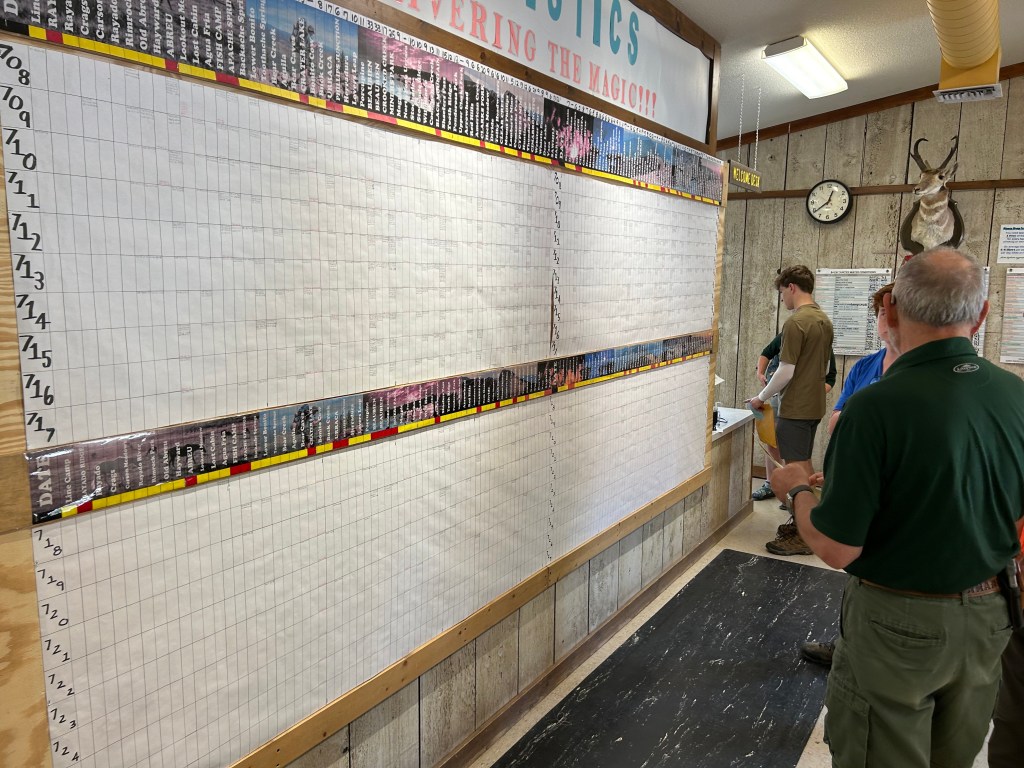
One anecdote about Philmont logistics comes from our other Troop 33 crew, hiking on a different itinerary than my crew. Over the first two nights of their trek, one of the adults discovered that her sleeping bag was not warm enough. She bought a new sleeping bag from the Tooth of Time Traders at basecamp, and they sent it to the staff camp where the crew was camping that night, so she was warm for the rest of the trip.
Philmont has its way of doing things, and that’s OK.
Philmont is likely the most used backcountry area in the United States. Thousands of scouts and adults hike in the backcountry daily during the summer. Each year, 15,000 to 25,000 people participate in Philmont programs, which has led to the development of unique procedures to protect the land and wildlife. A Philmont Ranger teaches every crew these practices during the first days of a trek, and they are mandatory, including:
- Stringent procedures regarding food and smellable materials.
- Unique bear-bag hanging processes.
- Tents only; no hammocks or tarps are allowed for sleeping.
- Patrol-method cooking in a large central pot.
- Specific dishwashing practices.
Many find these practices to be cumbersome and inefficient. To that, I say get over it. There are reasons for the Philmont procedures, and, in any event, the private property owner, Philmont, sets the rules. Implementing modern lightweight backpacking at Philmont is possible, but some accommodations must be made to comply with the regulations.
Philmont focuses on the youth, not the adults.
I will post more on this later, but Philmont emphasizes youth leadership. Adults are there for safety and support, but everyone should expect that scouts will be the primary decision-makers and leaders of the trek. I have heard scouting referred to as a tremendous bait-and-switch in that scouts think they are learning outdoor skills while learning more critical leadership and teamwork skills. The same applies to a Philmont trek. Each crew will have challenges, highs (hopefully literal highs on mountaintops), and lows, but dealing with these circumstances will instill leadership and teamwork lessons. For adults with a proper perspective, observing the scouts go through this sometimes-rough process is very fulfilling.

Why go to Philmont?
Despite a background of not entirely uneventful activities, I found Philmont to exceed my expectations. I treasure the chance to spend a week with my son while he has a blast with his friends. What Philmont offers is something that, to my knowledge, is not available anywhere else. Anyone with a kid in scouts should at least consider going on a trek.
Sounds great, where do I start?
If the above sounds like your kind of thing, I will go over the registration process and how to select a trek in the next post.
 Vamonos Baby!
One thought on “Philmont Overview”