
On a trip to visit family I found myself with an hour to kill in downtown Baltimore. Wanting to stretch my legs I consulted the map and saw a big square of green labeled Patterson Park. I was born in Baltimore and spent much of my life in the area but had never heard of Patterson Park. So decided to investigate. It’s situated on 137 acres on a high spot overlooking Fort McHenry. While Francis Scott Key was penning the Star-Spangled Banner as a prisoner on a ship in the harbor, American cannons on what is now Patterson Park fired on the British. Later, during the Civil War the site was used as a hospital for wounded Union and Confederate soldiers.
After the war, designers Frederick Law Olmsted, Jr., George Frederick, and Charles Latrobe redesigned the park in a “Late Victorian” landscape. The Olmstead influence is obvious and has a mini-Central Park feel. On a warm late October morning, Patterson Park was sublime.

I love exploring big urban parks – sometimes they have an almost magical aura that is simply not present elsewhere. As I wandered around Patterson Park, I thought about what separates those urban treasures from other parks that are fine, but not as inspiring.
For one thing, the great urban parks all have sufficient size. How big is big enough? I am not sure, but they need to be big enough so that you can get a little lost. Certainly, if you can stand in one spot and see the whole park, it’s too small.
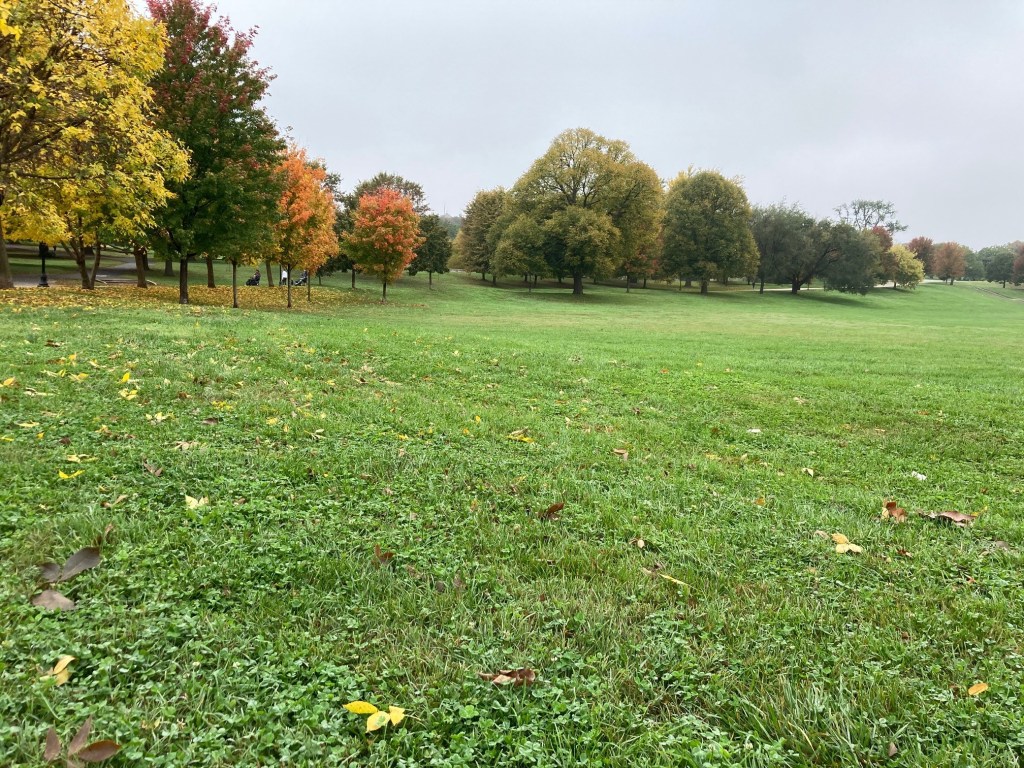
Great urban parks must also have great trees and – this is key – great lawns. The kind of grass that makes you want to take off your shoes and run barefoot. The lawns need to be huge – hundreds of yards across.
The best urban parks also have interesting things to see beyond grass and trees. It may be a spectacular skyline view of the city, a water feature, a historical object, or interesting natural outcropping. Patterson Park, has cannons, monuments to old generals, big flags, and fountains.

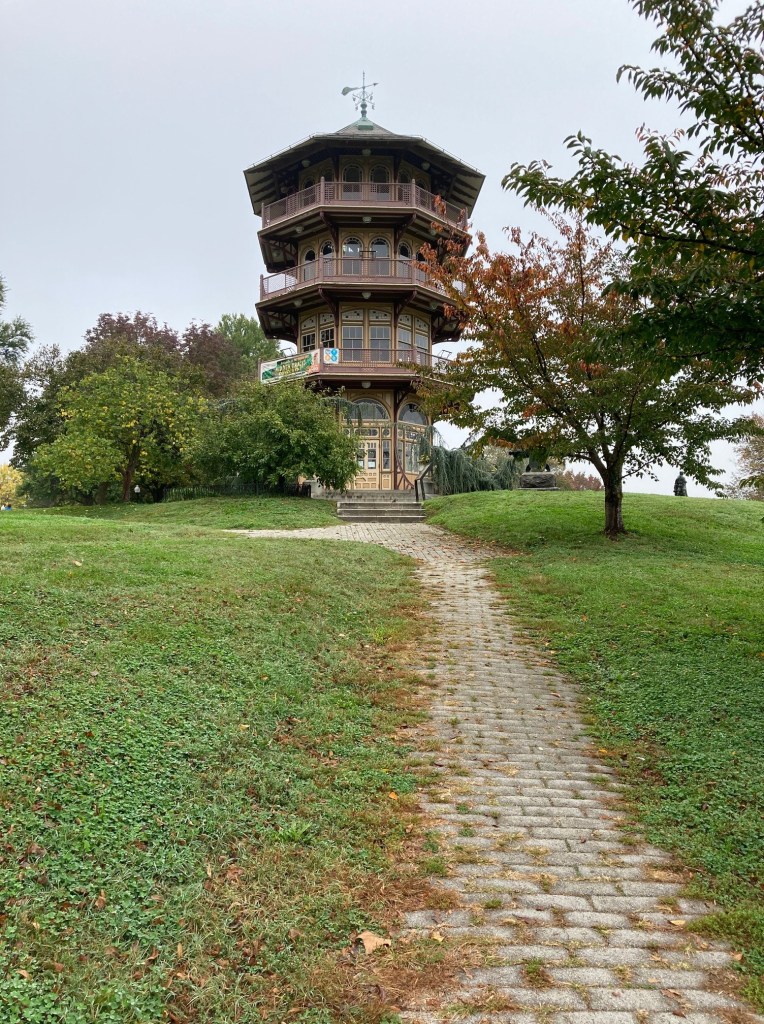
It even includes a pagoda that was built in 1892 as an observatory.
Great urban parks are also practical. They have ball fields. Places to train. They are not botanical gardens but spaces to use, places for action.
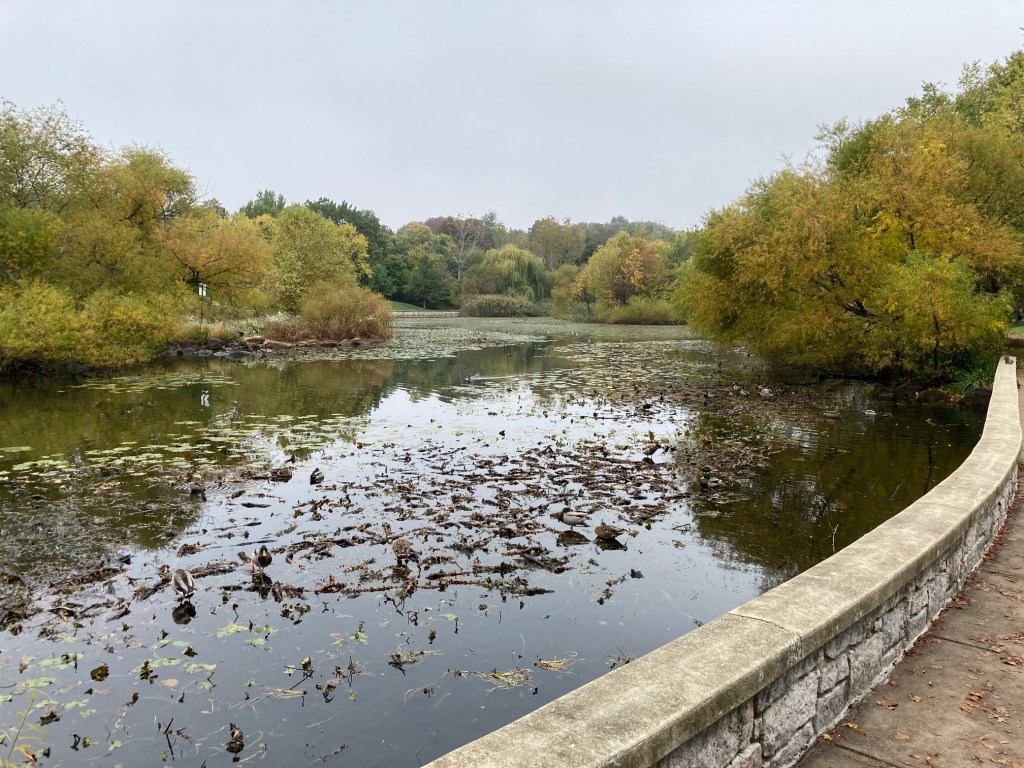
They must also have good bones. By that I mean they must be designed with a light touch that accentuates the natural geology but does not replace what nature created. Great parks seamlessly incorporate hills, streams, and wetlands which beckon further exploration. Paths don’t plow in straight lines across the landscape but wander. A great urban park is clearly manmade, but you can still feel the nature.
Finally, and most importantly, great urban parks reflect lots and lots of time, money, and vision. Many of the great urban parks were established by community leaders of the past who wanted to create a sanctuary for generations to come. The designers knew that they were not going to even live long enough to see those parks come into full blossom. Many urban parks are supported by dedicated volunteers who continue to labor to build on what came before. The selflessness of parks is also reflected an opportunity cost; in every case some development money was “left on the table” to create something that benefits everyone.
I wonder how much of that civic spirit remains. If we had to do it all over, would we still decide to set aside a large parts some of the most valuable land in our cities to create parks, or would we focus on a what makes the most money now? And if we are not confident that we would make the right choice, what are we doing about it?
The next time I take off my shoes to run across the lawn in Central Park or Boston Common or Patterson Park or Zilker Park, I am going to feel the grass, listen to the laughter of families having fun, take in the beauty, and and appreciate those that came before who made the right choice.
 Vamonos Baby!